|
|
Conference
- Panels
-
Possible Panels
- Facebook
Event -
Education -
Volunteer - [Planning]
International Online Conference on:
How Might We Build a
Culture of Empathy?
Permanently Ongoing
Sub Conference:
Empathic Family and Parenting
How to foster a culture of empathy within the family and
home life
http://j.mp/LARGym
|
|
|
|
|
Empathy and
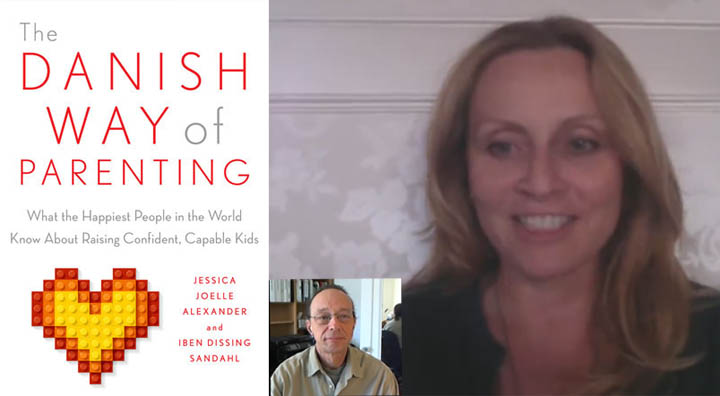
the Danish Way of Parenting
Jessica Alexander and Edwin Rutsch |
|
 |
|
Jessica Alexander is an American expat, author, columnist and cultural
trainer. She graduated with a BS in a psychology and went on to teach
communication and writing skills in Scandinavia and central Europe.
Married to a Dane for 13 years, she lives in Rome with her husband and two
children, Sophia and Sebastian. She is the co-author of
The Danish Way of Parenting; What the Happiest People in the World Know
About Raising Confident, Capable Kids.
|
|
"The Danes' highly developed sense of empathy is one of the main reasons
that Denmark is consistently voted one of the happiest countries in the
world (this year it is once again number one). Empathy plays a key role
in improving our social connections, which is a major factor in our
overall happiness."
|
|
|
|
|
|
Nurturing
Empathic Family and Parenting
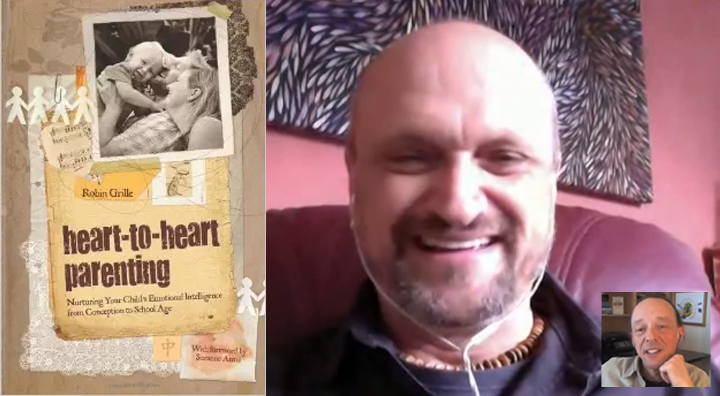
Robin Grille
"Our job is
to be the teachers of empathy - We are empathy farmers!"
|
|
 |
|
Robin Grille is an "empathy farmer", father, a psychologist in
private practice with twenty years' experience, and a parenting educator.
His articles on parenting and child development have been widely published
in Australia and overseas. Robin's first book: 'Parenting for a Peaceful
World' has received international acclaim and led to speaking
engagements around Australia, USA and New Zealand. 'Heart to Heart
Parenting' is Robin's second book.
A passionate speaker and social change activist, Robin's extensive research
has led him to feel that improved attention to babies' and children's
emotional needs is the most powerful way to move societies toward
sustainability and peace.
"The human brain and heart that are met primarily with empathy
in
the
critical early years cannot and will not grow to
choose a violent or
selfish life."
"Building
of human empathy is one brick at a time and sometimes
the
bricks come down in the
building process."
"Nobody
can escape life's struggles and traumas,
but those who have experienced
the empathy that helped
them build a strong sense of self in childhood
tend to have
a strong foundation for emotional resilience and can draw
on positive internal resources to help them resolve and rebound."
Sub Conference: Empathic Family |
|
|
|
|
|
Empathy-Based
Family Life with Hand in Hand Parenting
Craig Appel & Edwin Rutsch |
|
 |
|
Craig Appel is the Executive Director of Hand
in Hand Parenting, a nonprofit organization that uses the Parenting by
Connection approach. They say, "Our mission is to provide parents with
insights, skills, and support they need to listen to and connect with their
children in a way that allows each child to thrive. We do this through
easy-to-access support, classes, and literature. We offer vital information
to help parents deal with issues from children biting and kids' temper
tantrums to learning issues and bullying on playgrounds and in schools."
"I started to see that helping parents and changing the
dynamic in the family and how children are raised is a huge leverage point
for changing the world. Raising empathic children... has huge butterfly
rippling effects in terms of changing the world...
We model the behaviour of listening
with empathy, and that is how we help them grow into social and emotionally
intelligent children."
Sub Conference: Empathic Family |
|
|
|
|
|
Empathy-Based
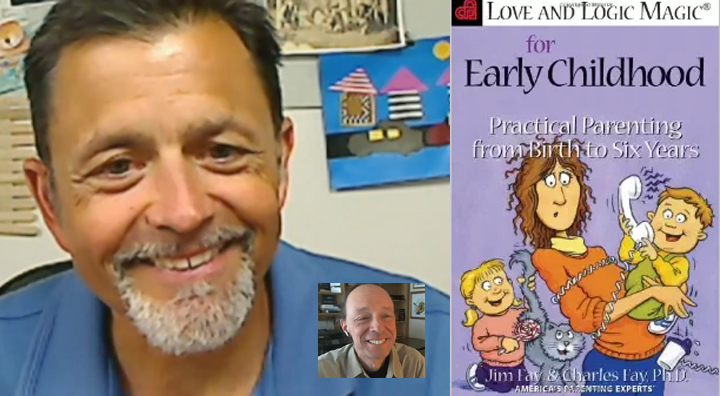
Family Life and Parenting with Love and Logic
Charles Fay and Edwin Rutsch |
|
|
|
Charles Fay, Ph.D. is a parent, internationally
recognized author, consultant and highly skilled public speaker. He is,
President of the Love and Logic Institute, Inc. The Love and Logic
Institute is dedicated to making parenting and teaching fun and rewarding,
instead of stressful and chaotic. They provide practical tools and
techniques that help adults achieve respectful, healthy relationships with
their children. All of their work is based on a psychologically sound
parenting and teaching philosophy called Love and Logic.
In this interview we discussed the role of empathy in
family life, parenting and the Love and Logic parenting model.
"So, that's the limit's part of it. Now the other end of
this
has to do with, how do we do this without losing their love?
That comes down to empathy. Remember that word.
When you hear Love and Logic, you think empathy. "
Sub Conference: Empathic Family |
| |
| |
|
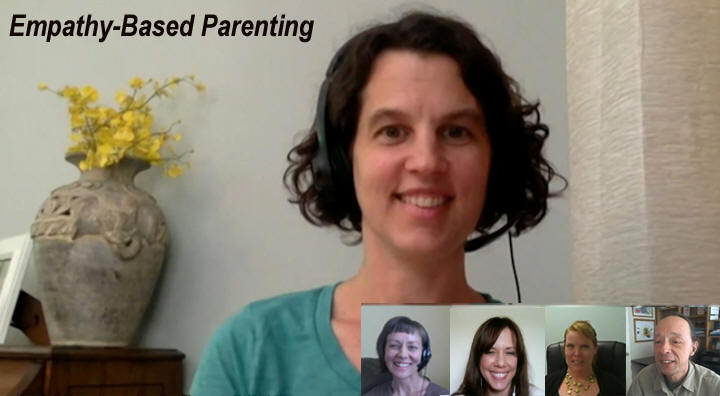
Empathy-Based Parenting Educators Discuss
What is the Role of Empathy in
Different Parenting Styles? |
|
 |
|
Our panel of Empathy-Based Parenting
Educators discuss, What is the Role of Empathy in Different
Parenting Styles? Some of the styles discussed are; Authoritarian,
Authoritative, Indulgent (permissive), Neglectful (uninvolved),
Attachment, Nurturant and Empathic Parenting.
Panelists
"there is room for all of us
to have empathy for all
of these parents who are struggling, whether
they are permissive, indulgent, authoritative,
authoritarian or absent. "
|
|
|
|
|
|
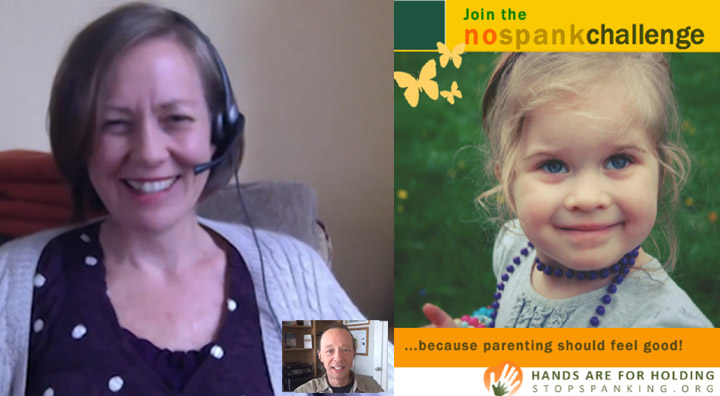
Empathic Parenting: Empathy as a Foundation of Family Life
Robbyn Peters Bennett |
|
|
|
Robbyn Peters Bennett, LMHC, CMHS is a psychotherapist, educator, and
child advocate who specializes in the treatment of trauma-related mental
health problems resulting from the effects of early childhood stress, abuse
and neglect. She is the founder of StopSpanking.org, a non-profit dedicated
to educating the public on the dangers of spanking. She is on the steering
committee of The U.S. Alliance to End the Hitting of Children.
In this dialog we talk about how science shows that we are biologically
wired for empathy and how trauma can block it and ways to restore blocked
empathy. We also discuss the role of empathy in different parenting
approaches.
"
I think for some, there is a religious idea that children are innately
sinful, and innately evil even maybe.
But what neuroscience is saying is
that children are innately empathic. That the fundamental
neurobiological orientation of the brain, is it learns though empathy and
through co-regulation and that children have an innate need to connect and
they have an innate need to feel good with us and to enjoy us."
Sub Conference: Home & Family |
|
|
|
Eva Scherer
and Edwin Rutsch: Building Empathy with Children, Touch & Massage
|
 |
 |
Eva Scherer, professional body worker and the
owner of several Sports & Therapeutic massage clinics in Auckland. In
2000 with like-minded professionals, Eva established
Child Connection
Trust, a registered charity. |
|
The aim of this organization is to introduce massage
into the mainstream education system as a low-cost prevention for child
abuse and family violence. Since then, her award winning Children
Massaging Children programme has benefited children in New Zealand as
well as overseas.
"Our programmes teach Peace and Empathy in the purest
way... Most people would react with surprise or
disbelief at the concept of empathy being taught in schools; however, this
idea is more than mere wishful thinking. The idea of teaching children
empathy has been the subject of extensive research in New Zealand and also
the focus of at least two Master's degree theses in Poland."
Sub Conferences: Education
and Home-Family
|
|
|
|
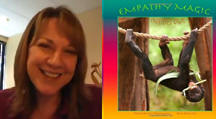
Anne Paris: How to Build a Culture of Empathy
with Children's Books
|
 |
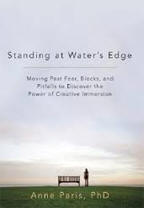 |
Anne Paris, PhD, author of
Standing at Water's Edge:
Moving Past Fear, Blocks, and Pitfalls to Discover the Power of Creative
Immersion, is a clinical psychologist in private
practice in Cincinnati, Ohio. She has practiced psychotherapy for over 25
years, and has specialized in working with artists, trauma victims,
couples, and parents. |
|
Also, Anne is coauthor (text) with Marian Brickner
(photography) of
Empathy Magic: Insides Out..
A new book that is a fun and whimsical way to introduce young children to
EMPATHY. Stunning photographs of bonobo apes illustrate what empathy is,
and how empathy helps build good relationships with family and friends.
Cute, fun, and engaging. A wonderful tool to help facilitate social skills
development, as well as to prevent later problems such as bullying, school
violence, and depression. Geared towards children aged 3-7.
Sub Conference: Home & Family and
Arts |
|
|
|
Robert Brooks: Dialogs on How to Build a Culture of Empathy
|
 |
 |
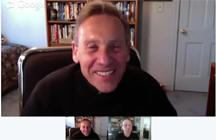
Robert Brooks is one of today's leading speakers on the
themes of resilience, motivation, and family relationships. During the
past 30 years, Dr. Brooks has presented nationally and internationally to
thousands of parents, educators, mental health professionals, and business
people with a message based on encouragement, hope, and resilience. He is
on the faculty of Harvard Medical School and the former Director of the
Department of Psychology at McLean Hospital. |
|
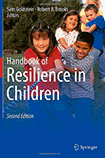
He is author or
co-author of 15 books including:
Handbook of
Resilience
and has written numerous articles about empathy.
He writes, "In my workshops and writings I have consistently
emphasized the importance of empathy as an essential skill for enriching
our lives... If empathy is not translated into behavior it will indeed be
a "sideshow." However, when empathy serves as a guiding light for our
behaviors, showing us the path that leads to compassion and caring, it
becomes a potent force that will improve the lives not only of our
children but ourselves as well. The more we bring together theory, skills,
and actions, the more we can engage in activities that permit us to lead
purposeful, fulfilling, caring lives.."
"a common characteristic of individuals who are successful as business
leaders, teachers, parents, spouses, or healthcare professionals is their
ability to be empathic. Empathic people are skilled in placing themselves
inside the shoes of another person and seeing the world through that
person's eyes. It is not surprising that Daniel Goleman listed empathy as
one of the main components of emotional intelligence. In my activities as
a therapist and consultant as well as in my personal life, I have come to
believe that empathy is implicated in all of our relationships, impacting
on the satisfaction and effectiveness with which we interact with others."
Sub
Conference: Home & Family
|
|
|
How
to Build a Culture of Empathy with Men's Groups: Owen Marcus, Ken Solin,
Edwin Rutsch |
 |
|
A discussion with Owen Marcus
and Ken Solin, both leaders in the
men's movement, on how to use
micro-communities to teach men empathy and other missing emotional
skills. Both Owen and Ken are long term workshop leaders and have a new
initiative for building a men's movement to foster Masculine Emotional
Intelligence. They hold Man Camp Weekends and have a tool kit where men
can start their own circles. ; |
|
Some of the questions addressed in this
dialog were
-
How would men sitting together shift
the 'culture of empathy'?
-
What is the best way to not just
educate men about empathy, but teach the skill?
-
Why are men behind on the empathy
curve?
-
In your Man Camp Weekend you speak
about a man 'being his own hero' - what does that mean?
-
How can men learn empathy in one
weekend?
"One of the values that I think men in
particular have to pass on is the value of empathy. Not
sympathy, empathy. And what that means is standing in somebody else's
shoes, being able to look through their eyes. You know, sometimes we get
so caught up in "us" that it's hard to see that there are other people
and that your behavior has an impact on them.
And sometimes brothers in particular don't like to feel empathy, don't
like to think in terms of "How does this affect other people?" because
we think that's being soft. There's a culture in our society that says
we can't show weakness and we can't, therefore, show kindness. That we
can't be considerate because sometimes that makes us look weak."
Barack Obama
Sub
Conference: Home & Family
|
|
|
|
Stephanie Mattei & Edwin Rutsch: How to Build a Culture of Empathy in the
Family
|
 |
|
Stephanie Bachmann Mattei is a
Certified Trainer with The Center for Nonviolent Communication. Parenting
is Stephanie's niche. Parenting is a powerful and far-reaching tool for
social transformation. Mahatma Gandhi's said, "If we are to reach real peace in the world, we
shall have to begin with the children." Parenting is one of the most crucial ways to bring about social change
in terms of consciousness evolution. We are moving toward a more empathic child rearing. |
How to Build a Culture of Empathy?
Presently the three main unempathic "Parenting Tools" are; Corporal
Punishment, Guilt and Shame inducing communication (verbal and non-verbal),
behavior modification through rewards carrots and sticks. Research show these approaches do not foster empathy and emotional
intelligence. In order to change a habit, we need to know what to put in its place.
We need an empathic parenting approach.
Sub
Conference: NVC and
Sub
Conference: Home & Family
|
|
|
|
Kenneth Barish & Edwin Rutsch: How to Build a Culture of Empathy in the
Family
|
 |
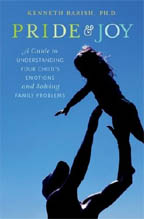 |
Kenneth Barish
is Clinical Associate Professor of Psychology at Weill Medical College,
Cornell University.
He is also on the faculty of the Westchester Center for the Study of
Psychoanalysis and Psychotherapy and the William Alanson White Institute
Child and Adolescent Psychotherapy Training Program. He is the author of Pride
and Joy: A Guide to Understanding Your Child's Emotions and Solving Family
Problems. |
How to Build a Culture of Empathy in
the Family?
1) It begins with our relationships with our
children. If we put aside as little as 10 - 15 minutes a day to share in
our children's interests and listen to their concerns, we strengthen
their willingness to listen to others.
2) All real dialogue begins
with our willingness to hear - and make a genuine effort to appreciate -
another person's concerns: their interests, anxieties, and grievances.
3) Then, when our children know that their feelings are valued and
important, we can teach them that so are the feelings of others.
4)
We can include doing for others as a regular part of our family lives.
Sub Conference: Home & Family
|
|
|
|
Marcy Axness
& Edwin Rutsch: How to Build a Culture of Empathy in the Family
|
 |
 |
Marcy Axness has a private
consulting-counseling practice specializing in mind-body fertility,
pregnancy psychology, adoption, and early parenting. She is author of
Parenting for
Peace: Raising the Next Generation of Peacemakers.
Marcy
also provides training for adoption, education, and mental health
professionals about the latest findings in the science of human thriving. |
How to build a culture of empathy in the family?
1. By giving our children the gift of a well-built brain -- i.e., the
frontal and occipital lobes have the circuitry they need to even process
empathy!! This begins before most people think parenting begins - in the
womb, or even earlier. It is our birthright to experience empathy, and
that right is taken from us if we don't have a well-wired brain.
2. For the child to witness and experience empathy, in an everyday,
all-day way.
3. Model empathy with our own cells, through how we care for ourselves.
Sub
Conference: Home & Family
|
|
|