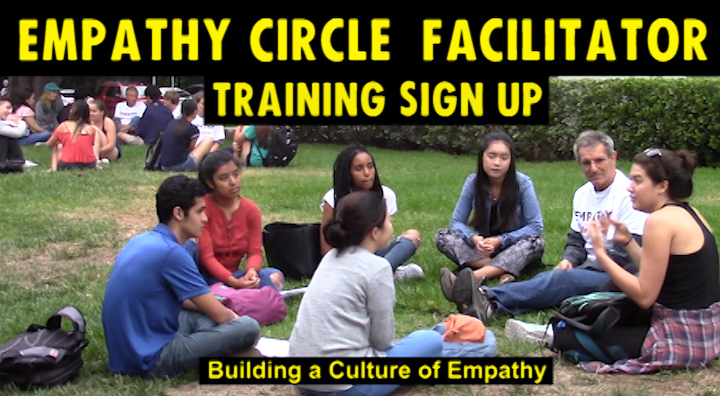
Learn to facilitate an Empathy Circle. Join this event if
you would like to take part in the training. This is a
multi session training,
2.5 hours per session.
We are forming multiple cohorts of
participants. There is limited
space in each cohort, and all participants must check with trainers to be
accepted into the training. The basics of facilitating an Empathy Circle
are fairly easy, however, it is a life long learning to deepen the skills
and build a more empathic way of being and culture.
The practice is the most effective gateway practice for learning,
practicing and
deepening listening skills and mindset.
More at EmpathyCircle.com
We reached the
400+
Empathy Circles,
Panels and
Interviews
milestone!!!
There
are over 400 hours of experts from around the world talking about
how we might build a culture of empathy.
Claire Yorke is an Author, academic and advisor
specializing in the role and limitations of empathy and emotions in
security, international affairs, politics, leadership, and society. Her
doctoral research focused on the role of empathy in diplomacy. How Empathy
- can be a tool for navigating complex international transitions and
building state relations. Claire is author of
Empathy in Politics and Leadership: The Key to Transforming Our World.
Edwin and Claire discuss the importance of empathy in politics
and society. Claire, a senior lecturer at Deakin University, emphasizes
the need for empathy to connect people and understand their intrinsic
dignity. They explore the challenges of empathy, such as dealing with
conflict and dehumanization.
Edwin introduces his wholistic empathy definition model, which includes
basic, self, imaginative, and mutual empathy. They debate the
effectiveness of empathy circles and the importance of active listening.
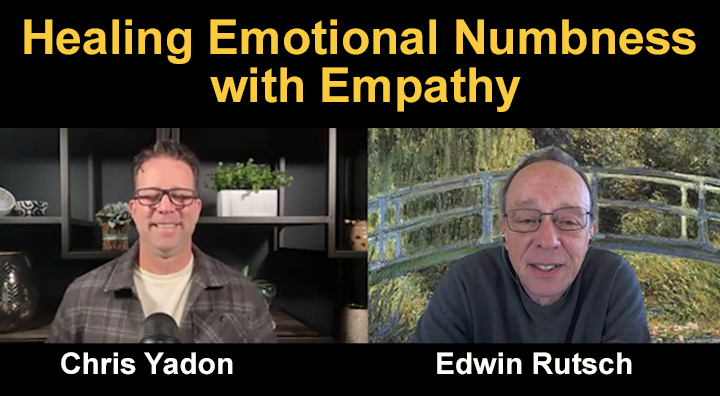
Edwin Rutsch,
Director of
The Empathy Center,
and
Chris Yaden,
Managing Director of
Saprea,
discussed Chris's article "Empathy
and Emotional Numbing Don't Get Along" on the relationship between
empathy and emotional numbing. Chris shared personal experiences to
illustrate how emotional numbing can hinder empathy and how practices like
interception and active listening can help individuals reconnect with
their emotions. Edwin and Chris discussed
disagreements about different terms.
They explored
the three concepts from Chris's article:
Concept 1:
Practice sympathy. They discussed the relationship between empathy and
sympathy.
Concept 2: Practice interoception. Interoception refers to the process of
sensing things within our bodies. Edwin calls this self-empathy.
Concept 3: Take compassionate action. They
discussed the relationship between compassionate action and
empathic action.
They agreed on the importance of nuance in defining and practicing
empathy, acknowledging the complexity of human emotions. The conversation highlighted the
value of dialogue and mutual understanding in advancing the empathy
movement.
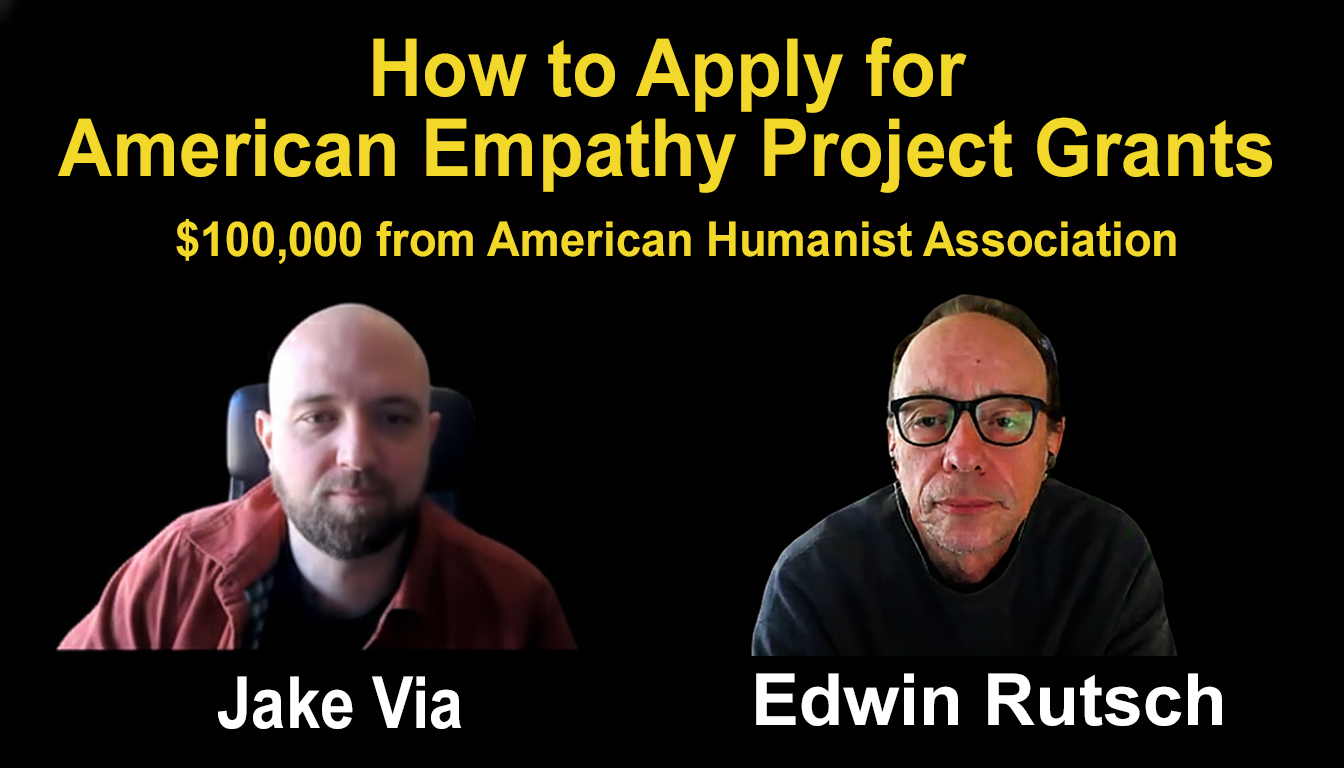
The initiative emphasizes empathy as a core American value, countering
criticisms from figures like Elon Musk.
The project includes various service projects focused on
food, care, affirmation, conservation, welcoming, respect, etc. with a
National Day of Service on May 2, 2026.
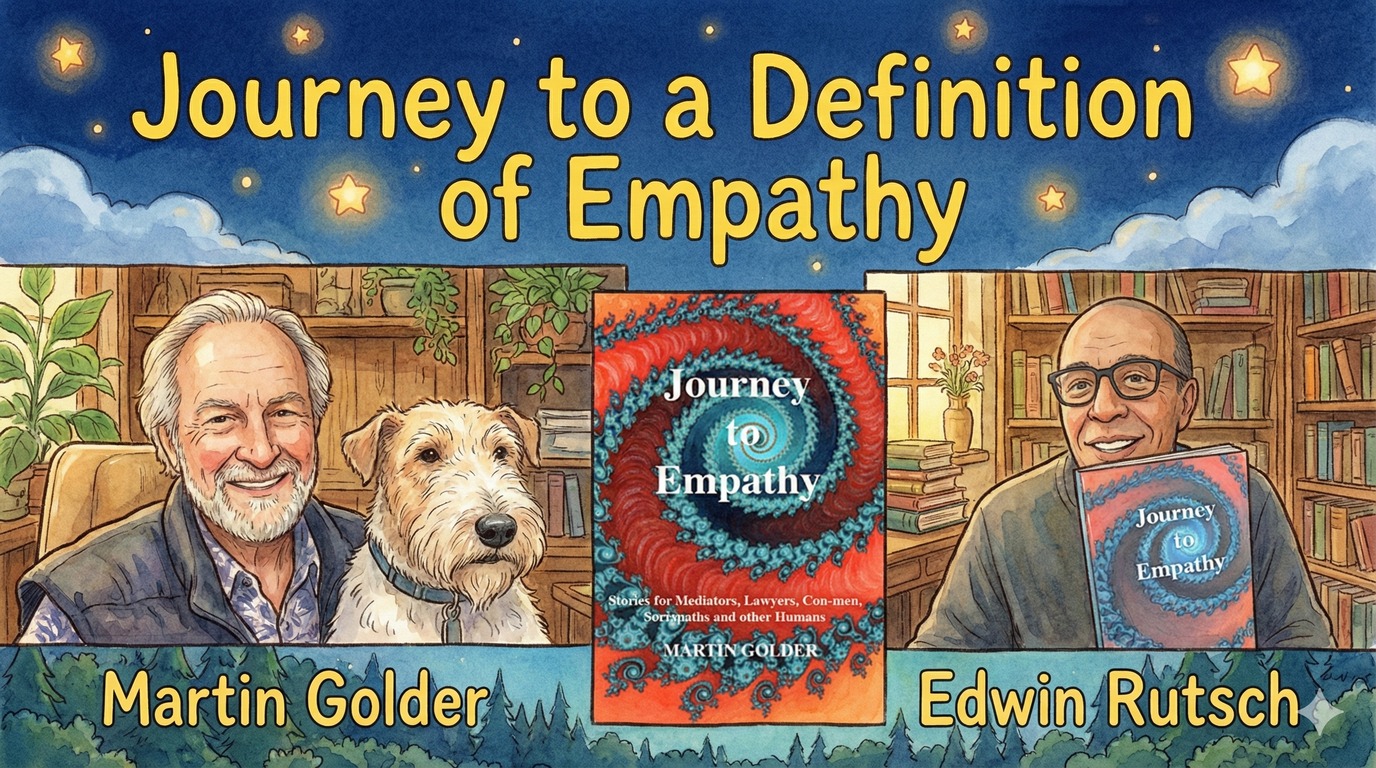
Edwin
Rutsch and
Martin Golder,
author of
Journey to Empathy, discuss the concept of empathy, its definitions,
and its practical applications. Martin, a retired architect and mediator,
shares his journey from mechanical empathy to genuine empathy, emphasizing
the importance of understanding and connecting with others. They
explore the definition of empathy, the role of empathy in mediation, and
its impact on brain structure.
Edwin introduces his model of Wholistic Empathy, which
includes Basic Empathy, Self-Empathy, Imaginative Empathy, Mutual Empathy
and Empathic Action. They also discuss the potential of empathy circles to
bridge political divides and improve societal dynamics, advocating for
empathy as a tool for better communication and conflict resolution.
"If we couldn't reconcile the definitions of empathy, the
serious problems related to the concept's ambiguity would be destined to
persist. For example, it would remain difficult to choose between the
plethora of methods for measuring empathy, or interpret and implement
studies of empathy's benefits."
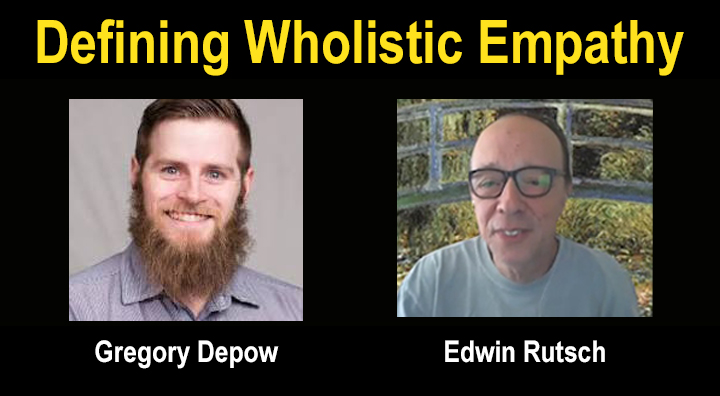
Edwin
Rutsch and
Gregory Depow discussed their work on empathy and explored various
definitions and perspectives on the concept, emphasizing its interpersonal
and relational aspects. Gregory highlighted the importance of
understanding how empathy is received and regulated, while Edwin focused
on developing a Wholistic definition of empathy that includes Basic
Empathy, Self-Empathy, Imaginative Empathy, and Wholistic Empathy. He also
pointed out the problems and contradictions of the cognitive-affective
empathy definition model.
Gregory Depow is a Postdoctoral Fellow at the University of California San
Diego, Rady School of Management, working with Dr. Chris Oveis in the
Empathy and Emotion Lab. He is particularly interested in how empathy
can be regulated to improve outcomes for the empathizer and the target of
empathy.
Edwin Rutsch is the director of
The Empathy Center. He is the developer of the
Wholistic Empathy
Definition Model which is based in the
Empathy Circle practice. The
mission of The Empathy Center is to build the empathy movement to make
mutual empathy a core global cultural value.
Graham Bodie is
an internationally recognized expert on listening and has published over
90 monographs, book chapters, and encyclopedia entries. His most recent
co-edited project,
The Handbook of Listening, is the first comprehensive and
interdisciplinary resource on the topic. Graham is
professor of Media and
Communication at University of Mississippi.
Allan Rohlfs
is a seasoned psychotherapist, educator, and certified trainer in
Nonviolent Communication (NVC) with over five decades of experience in
empathic listening and interpersonal communication.
His extensive career includes teaching at the Lutheran School of Theology
at Chicago for 30 years, where he focused on pastoral care and listening
skills.When I Listen People Speak and Come Alive, is the culmination of
author Allan Rohlfs five decades
long work of practicing listening and teaching.
Edwin and Alan discuss the evolution and impact of
empathic listening, emphasizing its transformative power in personal and
societal interactions.
Edwin Rutsch and Alan Rolfs discuss the evolution and
impact of empathic listening, emphasizing its transformative power in
personal and societal interactions. Rolfs, a psychotherapist and author,
highlights his journey with Carl Rogers and Eugene Gendlin, and the
development of his book on empathic listening. They explore the challenges
of scaling empathic practices, such as the Empathy Circle and Nonviolent
Communication (NVC), and the need for a cultural shift towards empathy.
Rolfs suggests that empathic listening leads to deeper connections and
personal growth, advocating for a broader dissemination of these practices
to foster a culture of empathy.
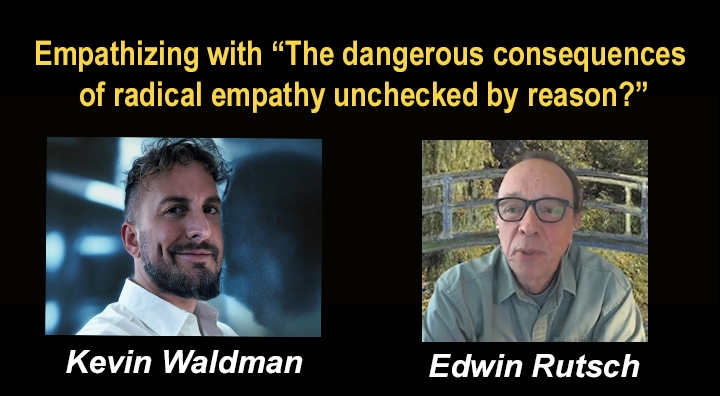
Edwin
Rutsch and
Kevin
Waldman discuss Kevin's article published in the Chicago Tribune and
other newspapers entitled,
"The dangerous consequences of radical empathy unchecked by reason."
Kevin criticizes "radical empathy" on campuses as performative and
harmful, emphasizing the need for genuine empathy that maintains critical
assessment and reason. Edwin introduces his Wholistic Empathy definition
model, which includes sensing into others' experiences, self-empathy,
imaginative empathy and the level of overall empathy within a community.
He advocates for making mutual empathy a primary social and political
value.
"As a researcher, I am now compelled
to ask: Can a society have
too much empathy?"
In the end, they agree on the importance of mutual
empathy, listening and dialogue in fostering understanding and reducing
extremism. Edwin proposes using empathy circles to facilitate empathic
listening and dialogue, aiming to bridge political and social divides.
Kevin plans to host Empathy Circles at his University to foster
constructive dialogue.
Part 2
Edwin Rutsch and Kevin Waldman discuss the concept
of empathy, particularly the misuse of the term "radical empathy." Kevin,
a graduate student at Northwestern, highlights the disconnect between
taught and real empathy, leading to a national crisis. He plans to conduct
empathy circles involving conservative and liberal students to foster
mutual understanding. Edwin emphasizes the importance of Carl Rogers'
active listening and mutual empathy. They discuss the need for empathy
circles to address conflicts and improve communication, particularly in
therapeutic and academic settings. Kevin aims to implement these circles
at Northwestern, involving his research partner and documenting the
process.
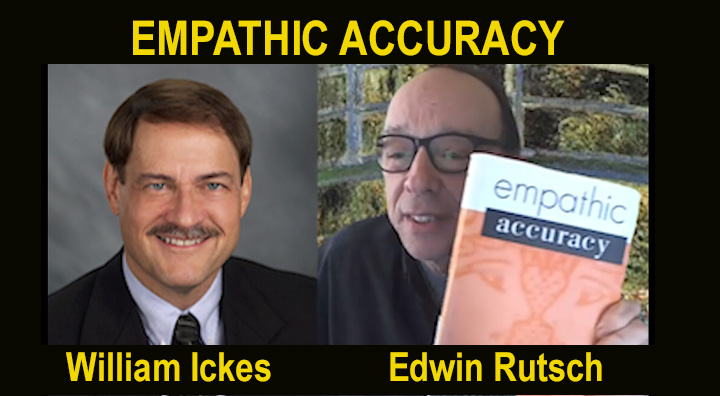
Edwin Rutsch and William Ickes discuss the concept of
empathic accuracy, focusing on how accurately individuals infer others'
thoughts and feelings. Ickes explains his research method, which involves
recording and analyzing interactions, then having participants infer each
other's thoughts and feelings. He highlights that empathic accuracy can be
improved through feedback, noting a 10% increase in accuracy with
immediate feedback. They also discuss the potential of empathy
circles to enhance empathic skills in various settings, including schools
and public spaces.
"I just study an aspect of empathy, which is empathic
accuracy. How accurate are we when we try to
make inferences about what other people
are thinking and feeling?"
Ickes emphasizes the importance of cultural sensitivity and
the need for empathy to be a mainstream practice for better social
interactions. Bill Ickes discussed his empathic accuracy research, which
led to collaborations in Belgium, particularly at Ghent University. Edwin
Rutsch shared his journey into empathy research, emphasizing the
importance of spreading empathy culturally.
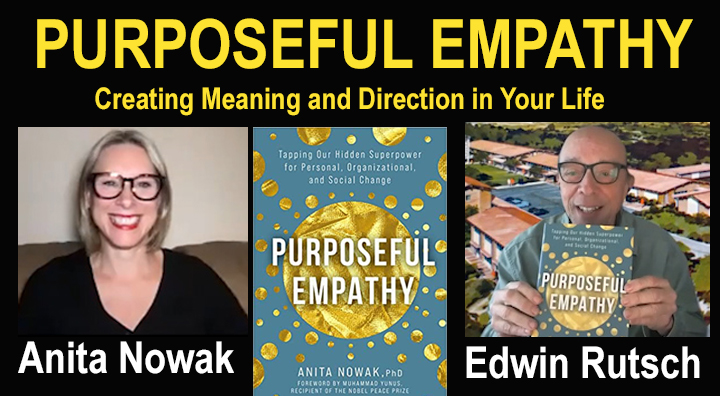
Anita Nowak is an empathy expert, author, award-winning educator,
international speaker, and certified coach. She holds a doctoral
degree from McGill University where she was named Professor of the Year in
2014 and 2019.
Anita held a variety of leadership and advisory roles within the
private and non-profit sectors and have served as a volunteer for many
social purpose organizations over the past 20 years, both locally and
internationally.
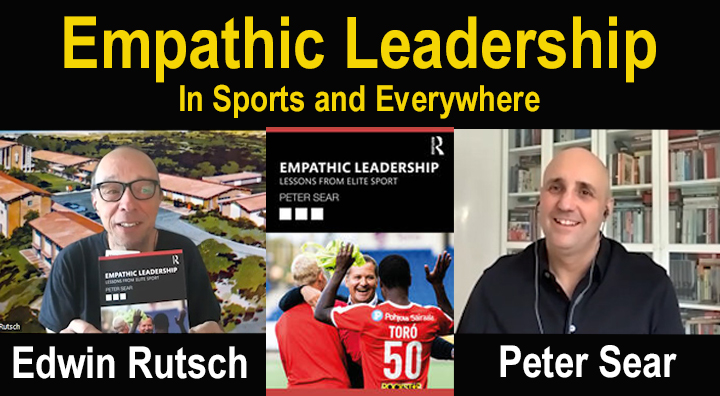
Peter Sear is a psychologist, writer, and
consultant. He gained his PhD from Loughborough University London, UK,
with his thesis Understanding Empathic Leadership in Elite Sport. He also
holds a master's degree in Jung and Post-Jungian Studies, a master's
degree in Human Resource Management and Industrial Relations, and a BSc in
Psychology. Peter is the Author of
Empathic Leadership: Lessons from Elite Sport.
In this dialogue we review Peter's model of Empathic
Leadership. The model has Self-Empathy at the core and includes, Empathic
Communication, Empathic Accuracy, Developing Empathy, Person-Center Focus,
Empathic Climates and Empathic Relationships.
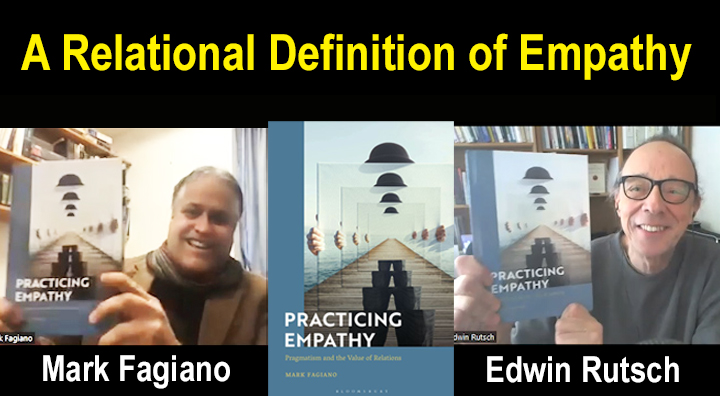
Mark Fagiano
is a philosophy professor at Washington State University who specializes
in American pragmatism and ethics. Mark is the founder of Empathy Vision,
which offers empathy-activation solutions through seminars, workshops, and
online courses. He is author of
Practicing Empathy: Pragmatism and the Value of Relations.
Grounded in the philosophical tradition of American Pragmatism, Mark's
approach demonstrates the practical benefits of adopting a broad and
pluralistic understanding of empathy as both an idea and a practice.
In this dialogue, we discuss Mark's
relational definition of empathy and discuss each chapter of his book
in-depth. We also discuss how the
Empathy Circle practice fits into his definition. Chapters
Reviewed.
1. Empathy and Pluralism 2. Pathos and the Death of Dualisms
3. Empathic Projections - Feeling Into
4. Empathic Connections - Feeling With 5.
Empathic Care - Feeling For 6. Is Empathy Moral? 7. Can Empathy Be Developed? 8. Empathic Democracy as a Way of Life
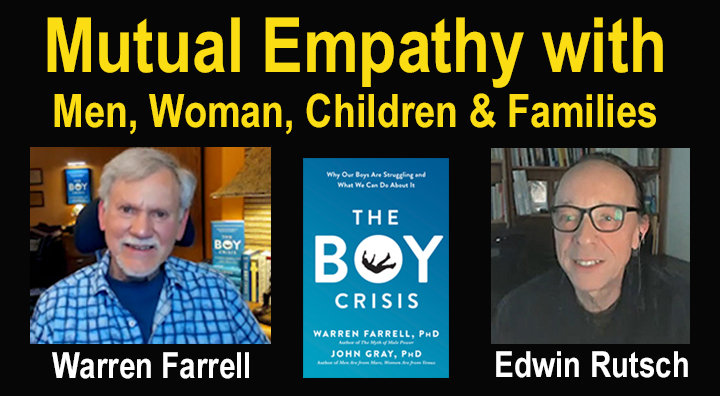
Warren Farrell is an American educator, activist and author
of numerous books on men's and women's issues. He is often considered "the
father of the men's movement," but he started out as a vocal feminist and
was a board member of the New York City chapter of the National
Organization for Women in the early 1970s.
In this interview, we discuss the importance of mutual empathy with men,
woman, children, families and society.
"Empathy is at the core of family stability and love.
I've never had a couple come to me and say,
I want a divorce; my partner understands me."
"Humans have spent (10k+) years learning to fight
and debate with the other side, and almost
no time learning to listen and empathize."
"Teaching the child to treat boundaries seriously teaches the child to respect
the rights and needs of others. Thinking of another's needs creates empathy."
Warren Farrell
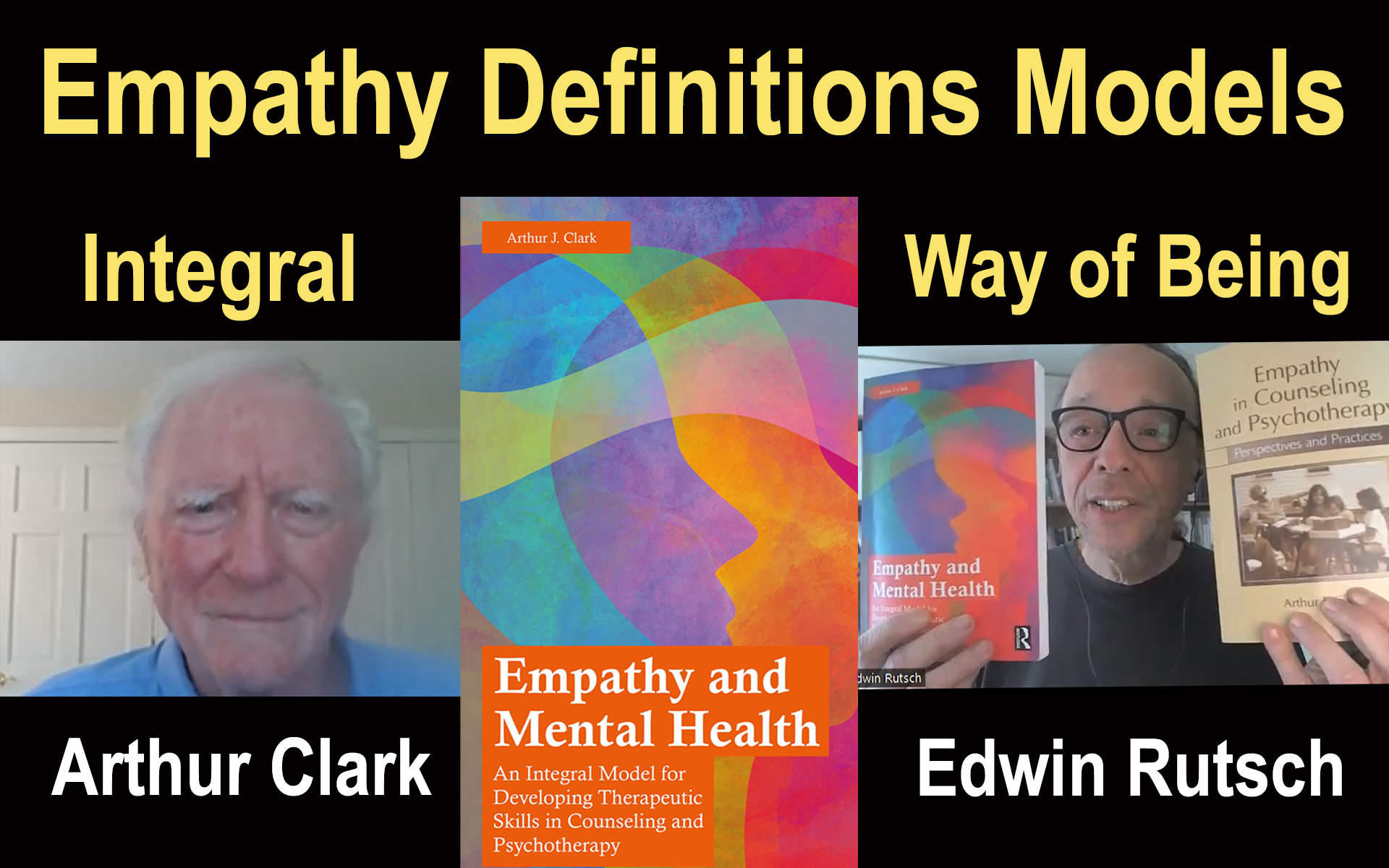
We discussed Arthur's Integral Model of Empathy in the context of therapy,
which consists of three aspects; Interpersonal, Subjective and Objective
Empathy. We also talk about Edwin's, Empathy as a Way of Being Model.
Subjective Empathy - enables a counselor to momentarily
experience what it is like to be a client,
Interpersonal Empathy - relates to understanding a client's
phenomenological experiencing, and
Objective Empathy - uses reputable knowledge sources
outside of a client's frame of reference.
Paul is working on making compassion a
primary personal and cultural value, while Edwin is working on
making empathy a primary personal and cultural value. In this
dialogue we explore the differences, similarities and relationship
between empathy and compassion.
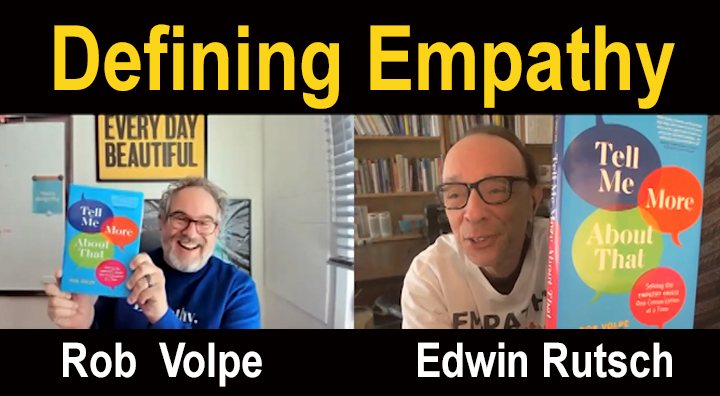
Rob Volpe is
a marketing professional and researcher and provides companies with a
heightened empathy toward their customers that enables more effective ways
to communicate with them. He is author of 'Tell
Me More About That: Solving the Empathy Crisis One Conversation at a Time'.
Rob draws on his thousands of interviews with everyday people to
illustrate the 5 Steps to Empathy -- actions you can use to build a
reflexive empathy muscle. In this conversation we solve (or try to) the
empathy crisis by taking a deep dive into the definition of empathy.
"Stein's account of empathy is built on an understanding
of people in community with each other. Empathy in this understanding is a
purposeful perceptive ability that we employ as we navigate our way into
the future in cooperation with each other. Emotions are not viewed as
static states, contained within an individual."
Ashok
Bhattacharya is a psychiatrist in private practice and founder of
The Empathy Clinic. The
clinic is committed to the teaching, practice, and improvement of empathy.
Empathy is a starting point for compassion; what we do when we care about
each other. Appreciating the experience of another person is a capacity
and a skill. Whether we're in a relationship, in the family, with friends,
or in the workplace, they all work better and smoother when empathy is
being practiced. In this discussion we explored
the meaning and definition of empathy.
"Appreciating the experience of another person is a
capacity and a skill. Empathy is a psychological-emotional investigatory
tool. With education and practice we can sharpen this tool and learn how
to use it responsibly, professionally, and personally.
Our brains are designed for empathy. "
Neema Trivedi-Bateman
is Senior Lecturer in Criminology at Anglia Ruskin University, and also
the Course Leader for two Criminology courses. Her PhD thesis, is
entitled 'The roles of empathy, shame, and guilt in violence
decision-making'. Neema's research interests include youth crime,
developmental criminology, forensic psychology, violent offenders, and
moral decision-making.
"Empathy is crucial for supporting law-abiding behaviours
and decisions, and traditional sources of empathy development, such as
parents and teachers, are vital for the development of lawful behaviour in
children.
Deficient empathy is a risk to all members of the
community and can occur when children have inadequate or absent role
models. If deficient empathy can be identified and addressed from infancy,
we strongly believe that fewer incidents of harm and wrongdoing will occur
in society."
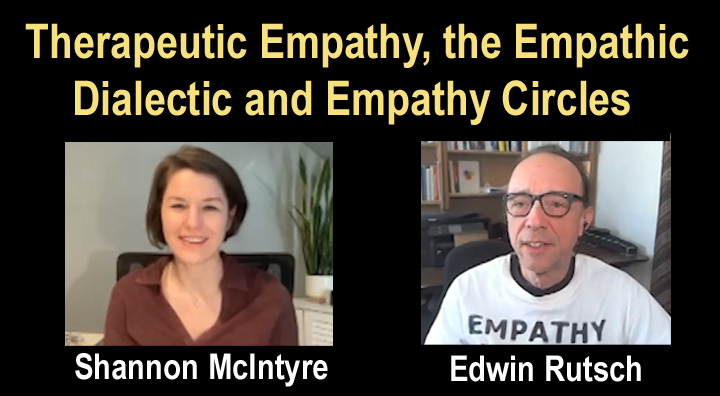
Shannon McIntyre is an Assistant Professor in the Department of
Clinical Psychology at Antioch University New England. Shannon is broadly
interested in adult development from attachment-based and psychoanalytic
perspectives, as well as psychotherapy process and outcome. Initially, her
research interests were geared toward better understanding how
stigmatization impacts identity formation in women.
More recently, however, Shannon has been focused on the therapist
characteristics that facilitate and/or inhibit therapeutic empathy.
She has consequently presented at national conferences and co-authored
articles related to the empathic process. As a Research Associate at the
Program for Psychotherapy, Dr. McIntyre will continue to conduct research
on therapeutic empathy, and on topics related to psychotherapy more
generally.
Rogers contended that therapeutic empathy is best described
as a multi-dimensional process, which means "being sensitive, moment by
moment, to the changing felt meanings which flow in this other person...
and sensing meanings of which he or she is scarcely aware."
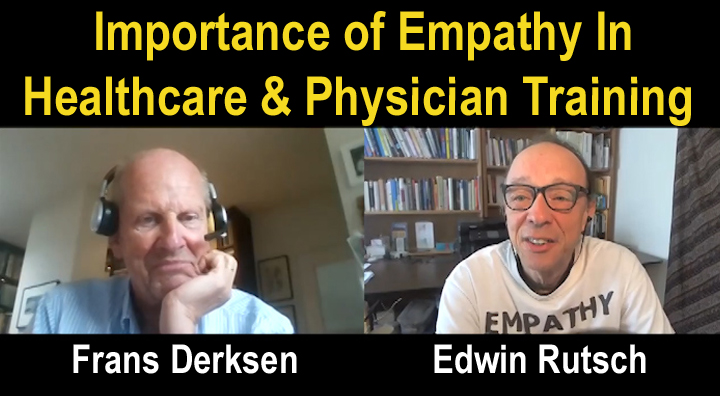
Frans
Derksen is a Dutch retired Medical Doctor and has a PhD in Empathy in
Patient and Physician communication. In this discussion, Frans shares his
research on the importance and effectiveness of empathy in healthcare. His
conclusion is that specific education about the theory, evidence of
empathy and training of specific empathic skills, should be explicitly
taught to medial students and residence. Edwin talks about the
effectiveness and application of
Empathy Circles as a foundational empathy building practice.
More explicit attention needs to be paid to empathy in
physician training by embedding theoretical education, explicit attention
to skill training and assessment of empathic behavior by patients and
supervisors.
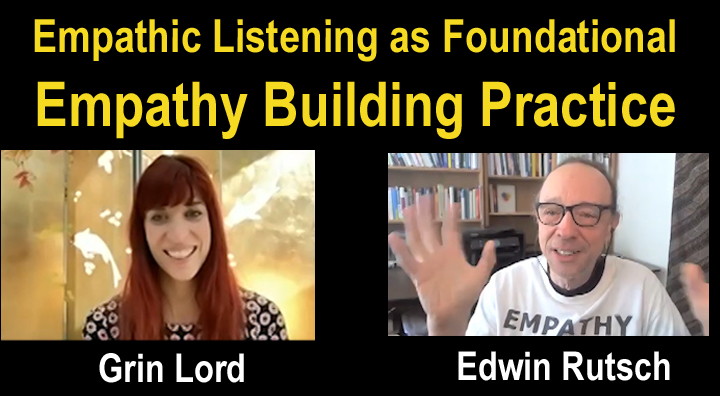
Grin Lord
is a board certified, licensed clinical psychologist who provides
psychotherapy for children, adolescents, parents and families. Grin is
co-Founder of Empathy Rocks, and is an AI researcher. We discuss
the foundational importance of empathic listening for nurturing a more
empathic way of being and world.
"I learned that reflections were incredibly powerful
conversational tools. Good Motivational Interviewing therapists are
supposed to provide a minimum ratio of two reflections to every question,
but ideally four or more per question.
I loved reflections. I thought
reflections were so great, that I designed years of therapy training and
eventually an entire company around teaching people to provide them."
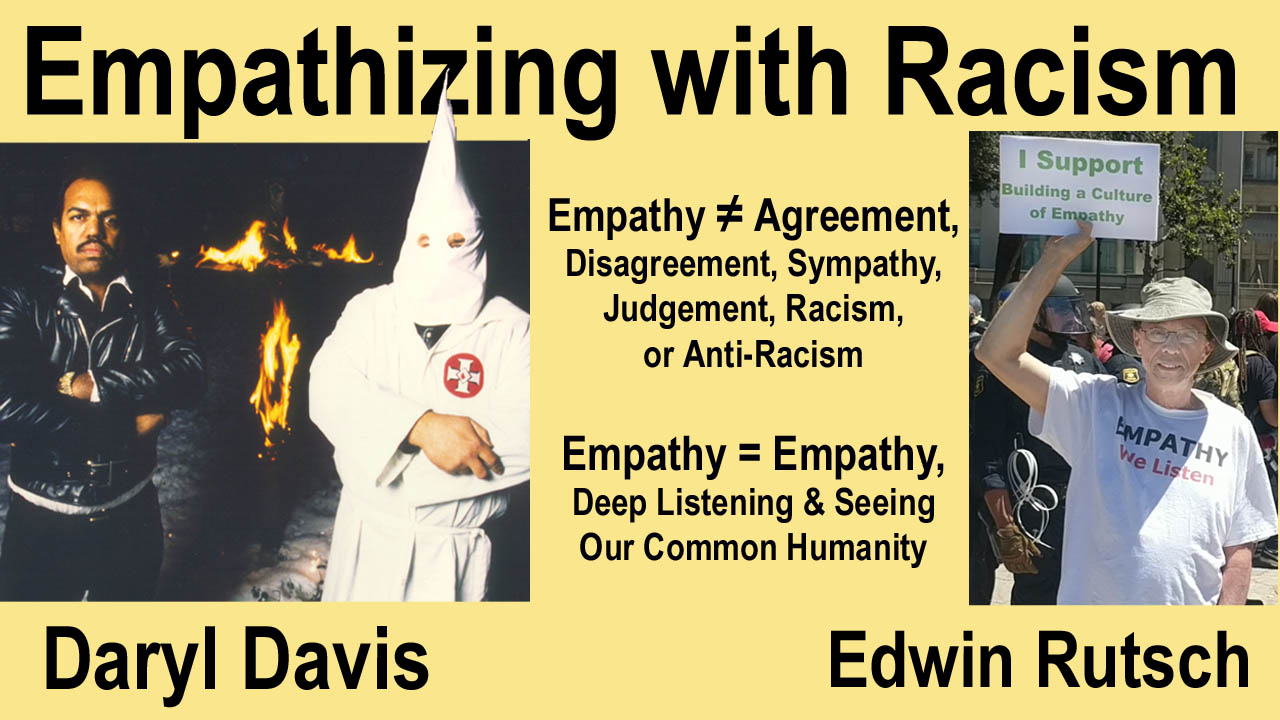
Daryl Davisis
an African American musician, author, actor, bandleader and a race
relations expert. He is well
known for his work on dialoguing with, and befriending
members of the Ku Klux Klan and other extremist groups. Through
dialogue, empathy and understanding he has convinced
Klansmen to leave and denounce the KKK.
In this dialogue we talked about the role of empathy in
Daryl 's work. Daryl describes his process of how to effectively listen to,
understand and dialogue
with people. It is about not demeaning or attacking people, but about
seeing their common humanity. Once you are willing to listen to others,
they are more willing to listen to you and engage in constructive
dialogue. We also talked about organizing and holding
Empathy Circles between different opposing groups.
'You're not going to beat the meanness out of a mean dog.
You start beating a mean dog, it's gonna become more mean. You start
beating racists, they're gonna
become more racist."
"People learn racism through dialogue. Somebody tells them
about it. So if you can learn it through dialogue,
you can also unlearn it
through dialogue."
-
Daryl Davis
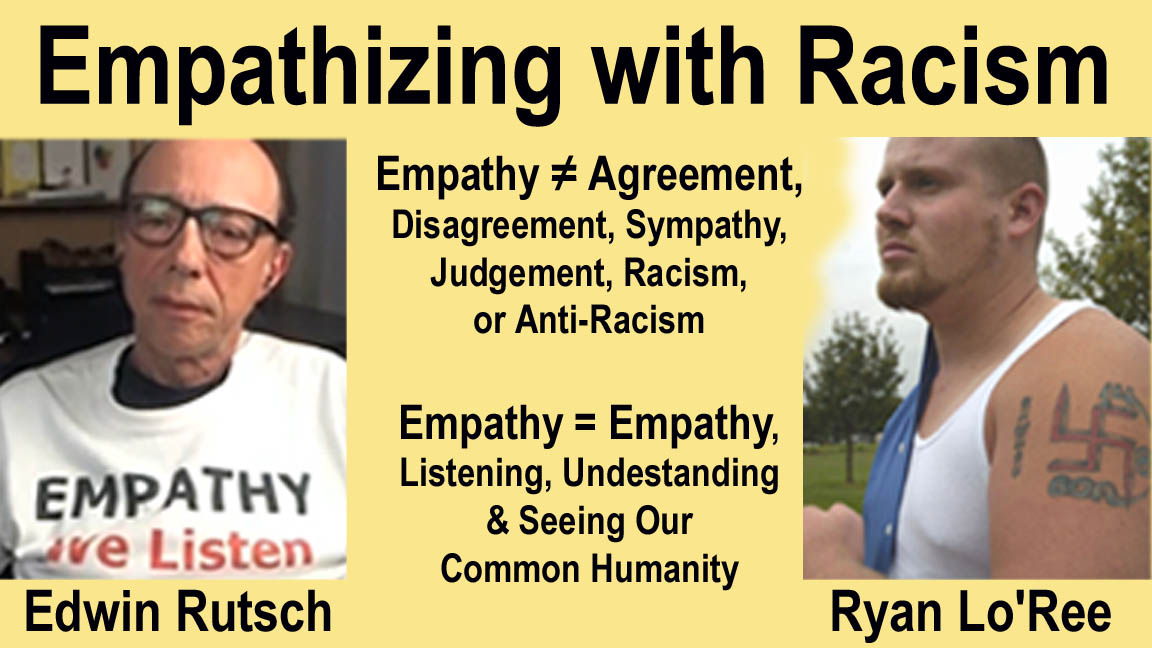
Ryan Lo'Ree, was once a right-wing extremist with the Rollingwood Skins, a
Michigan-based offshoot of the largest Nazi movement in the United States.
While in the organization, he moved up the ranks quickly to become Vice
President. In his role, he was responsible for mainstreaming hate groups
on social media. He went through a process of transformation and healing
centered around trauma associated with sexual, physical and mental abuse
he endured from male family members. He now works with
Light Upon Light as
Interventionist and Program specialist, contributing to the organization's
work on combating polarization, structural injustice, racism, hate, and
violent extremism.
"To classify another human being as less than,
is the moment you lose your empathy
and the argument."
We discussed how to bring people out of extremism
with empathy. Empathy does not mean you agree or disagree, or
sympathize with someone. It means listening deeply and
understanding. It means seeing the common humanity of each other,
and that builds connection and healing. The act of empathy is
transformational.
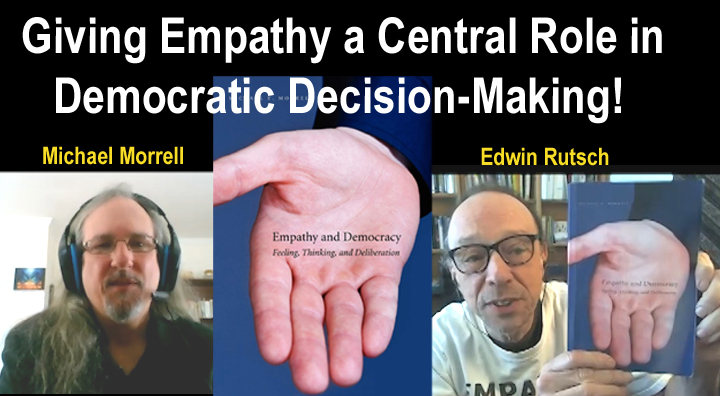
Michael E. Morrell is Associate Professor, University of Connecticut.
His main research interests examine the connections between
empathy and democracy, the effects of direct democratic participation on
citizens, and the role of political efficacy in democracy, public opinion,
and political behavior.
Michael is also continuing to explore his theory of the
role of empathy in democracy as it relates to topics ranging from
President Barack Obama to agonistic democracy. Michael is author of
Empathy and
Democracy: Feeling, Thinking, and Deliberation.
"We live in a time when practicing
empathy, taking action, and creating change and building trust are more
important than ever."
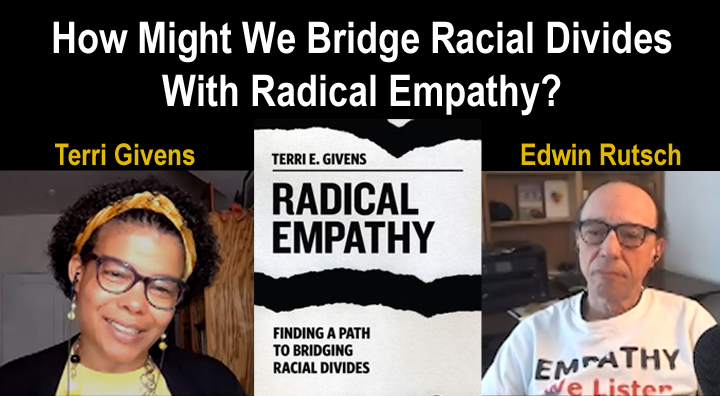
"Radical Empathy is the core idea that runs through this
book. It requires moving beyond walking in someone else's shoes to taking
action that will not only help that person but will also improve our
society.
Practicing radical empathy can provide real change in
peoples lives, and I empathize the word practicing - I focus on the fact
that having empathy is different from practicing empathy."
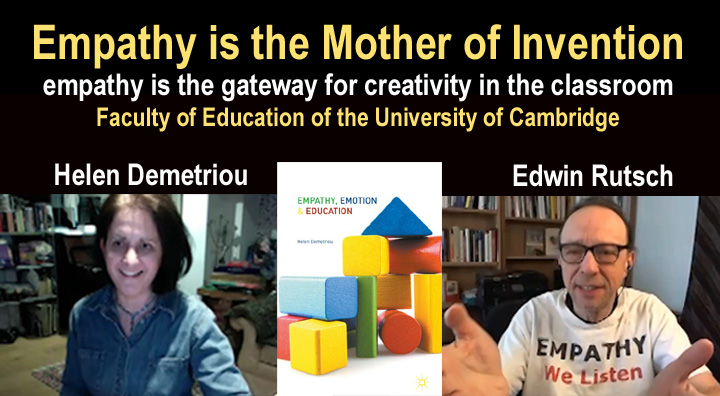
Helen Demetriou obtained her PhD in
developmental psychology from the Institute of Psychiatry, University of
London in 1998, where she also worked at the Centre for Social, Genetic and
Developmental Research. Since then, she has worked at the Faculty of
Education of the University of Cambridge as Research and Teaching
Associate. Helen is the author of,Empathy, Emotion
and Education. She has performed many studies about empathy,
creativity and education, including the recent study,Empathy is the mother of invention: emotion and cognition for
creativity in the classroom.
"we argue that a very important aspect that influences
invention and creativity is the empathy factor...
Such exploration and immersion through perceptual
openness, role-taking and flexible ego-control characteristic of empathy
correlate and lead to creativity and thence to constructive evaluative
reflection:
explore, create, evaluate.
Empathy and open-mindedness in the real world: all these form the vital
ingredients for the creative process to thrive and for encouraging the
designers of tomorrow."
"If we were committed to developing empathy in our
schools and if we demanded empathy from our politicians and from leaders
within the corporate world and beyond, then our society would experience the
shift from exclusion and fear of differences to a deep appreciation for
diversity and also diverse ideas."
"I recently spoke with Edwin Rutsch, founding
director of the Center for Building a Culture of Empathy. He has been working
for over 12 years to create a more empathic society. He has interviewed over
200 empathy experts and posted the interviews on his website
CultureOfEmpathy.Com. Edwin created a simple and accessible method of
learning, practicing and deepening mutual empathy in small groups called
Empathy Circles.
He uses this method to lessons political, social, family
and personal divides. He says he finds Empathy Circles to be the most
effective first step or gateway practice for enhancing empathy skills."
- Arthur P.Ciaramicoli,
The Transformation of Belief: Empathy Circles and Group Practices
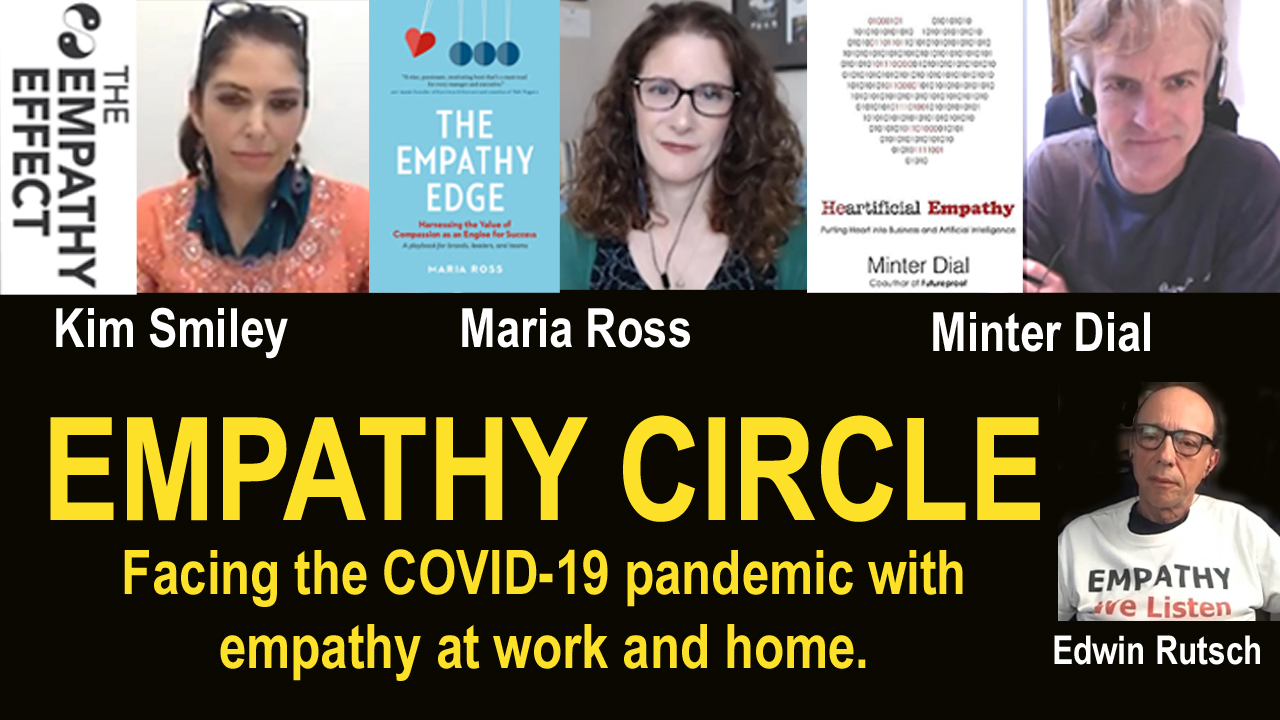
Kim Smiley
Founder: The Empathy
Effect
The goal of The Empathy Effect is to inspire loving kindness in public and
private life, at home, at school, at work and in the world. What are you
waiting for? Join the Empathy Revolution.
Edwin Rutsch
Director: Center for Building a
Culture of Empathy
The Center for Building a Culture of Empathy is a leader of the global
empathy movement. Our mission is to build a movement for creating a global
worldwide culture of empathy and care.
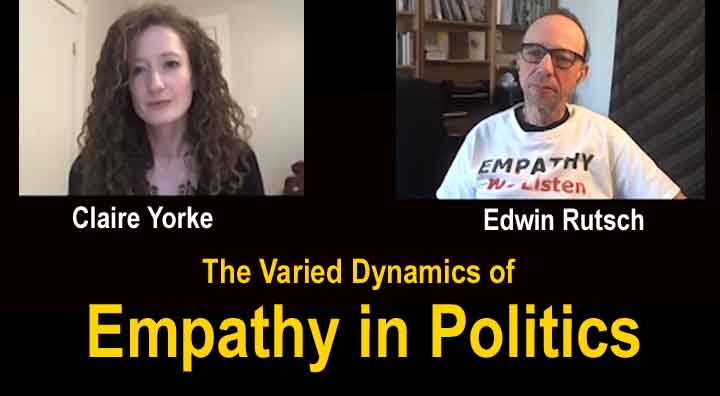
Claire Yorke
is
a Henry A. Kissinger Postdoctoral Fellow at International Security Studies
and the Jackson Institute for Global Affairs at Yale University. Her
research explores the role and limitations of empathy and emotions in
international affairs and diplomacy. Claire wrote an
article/paper titled,
The Significance and Limitations of Empathy in Strategic Communications.
"This article examines the varied dynamics of empathy
through the lens of American politics at domestic and international
levels. It argues that empathy is a multifaceted and complex concept with
transformative power, but also with practical and political limitations,
which deserves far greater attention from strategic communications
practitioners."
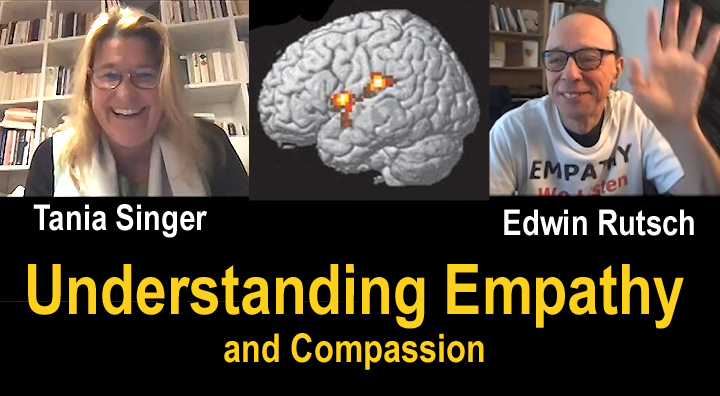
Tania Singer is a social neuroscientist and psychologist at the Max Planck
Institute in Berlin, Germany. Her research aims to increase our
understanding of the foundations of human social behavior. Adopting an
interdisciplinary approach, she and her team investigate the neuronal,
hormonal, and developmental foundations of human social cognition, social
and moral emotions such as empathy and compassion. In this dialogue we
discussed the nature of empathy and her studies on different empathy
and compassion training types and their benefits.
Study Conclusion:
"Contemplative dyads elicited engagement similar to classical
contemplative practices and increased perceived social connectedness.
Contemplative dyads represent a new type of intervention targeting social
connectedness and intersubjective capacities deficient in participants who
experience loneliness and in many psychopathologies."
In other words, there are a lot of benefits in
people empathically listening to each other. One of the benefits is
that it reduces social anxiety about being judged and they feel more
connected. This feeling of lower stress and greater connection lasts over
time as well.
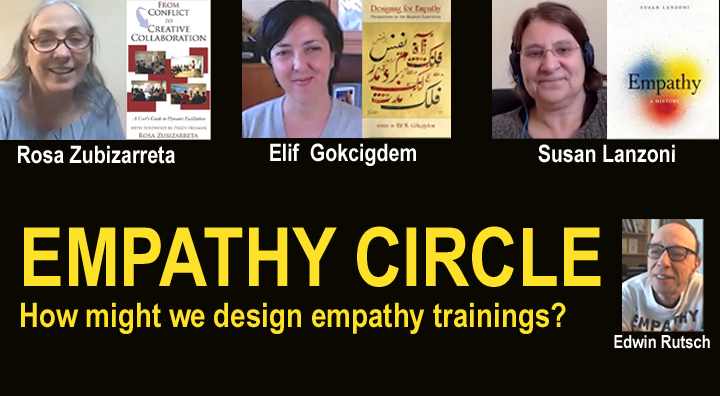
An Empathy
Circle with empathy activists, experts, book authors, etc. exploring
different aspects of empathy.
Participants
"Empathy Circles are the most effective
gateway and foundational empathy building practice."
Edwin Rutsch
Director: Center for Building a Culture of Empathy
"It's time to harness the power of empathy by creating
shared terminology, vision, and values across disciplines and sectors. As
leaders of cross-industry dialogue and innovation, we are positioned to
develop the standards and best practices of the empathy-building
movement." Elif Gokcigdem
Author: Fostering Empathy Through Museums
"History tells us that empathy comprises a
complex, artful but also effortful practice that enrolls feelings,
intellect, and imagination." Susan-Lanzoni
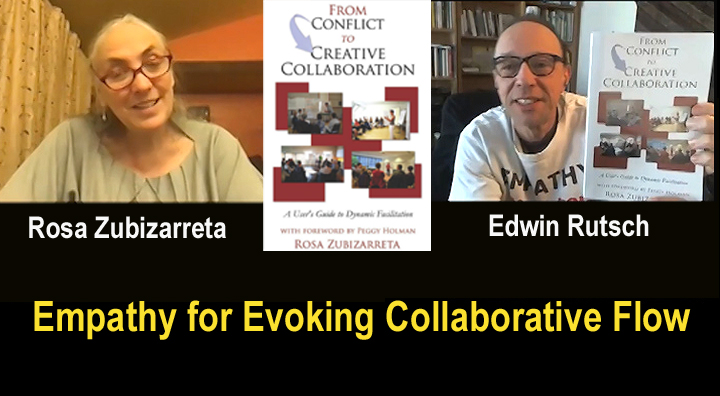
Author: Empathy: A History "Rosa brings deep content expertise in
working with engaged empathy to evoke collaborative sense-making, group
flow, and energetic alignment within highly diverse groups." Rosa Zubizarreta
Author: From Conflict to Creative Collaboration: A User's Guide to Dynamic
Facilitation
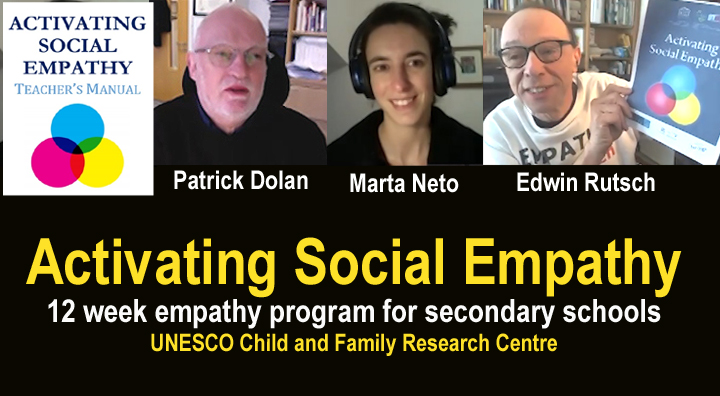
Patrick
Dolan is a professor and director of the
UNESCO Child and Family Research
Centre at the National University of Ireland Galway. Pat is co-developing and
testing the Activating Social Empathy program. Social Empathy Education
aims to develop and mainstream Social Empathy Education program in schools
and in teacher education.
The program is structured around 4 key learning principles:
1. UNDERSTANDING EMPATHY: Students learn what
empathy is and why it is important.
2. PRACTICING EMPATHY: Students practice and
strengthen their empathy skills.
3. OVERCOMING THE BARRIERS: Students discuss the
barriers to empathy and identify ways they can overcome these obstacles.
4. PUTTING EMPATHY INTO ACTION: Students take part
in a social action project of their own choosing.
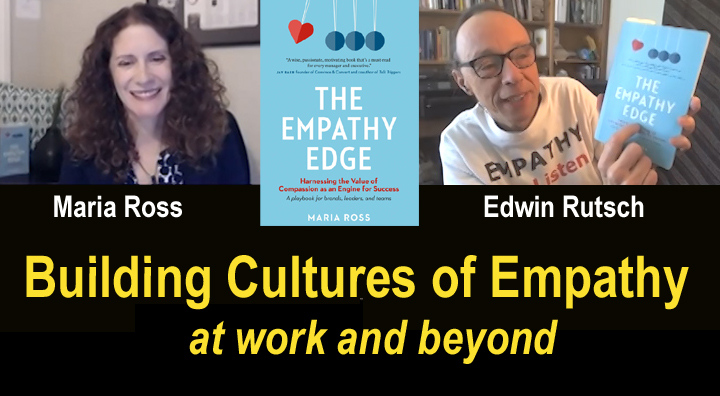
Maria Ross is the founder of Red
Slice, a consultancy that advises entrepreneurs, startups, and
fast-growth businesses on how to build an irresistible brand story and
authentically connect with customers. She is a keynote speaker who
regularly speaks to audiences on marketing and building an engaging brand
story that drives growth and impact. Maria understands the power of
empathy at both a brand and personal level. She is author of
The Empathy Edge: Harnessing the Value of Compassion as an Engine for
Success.
"When you encourage empathy among your workforce and
parlay that mindset outward to customers, your company will thrive. Why?
Because empathetic businesses better understand their customers and can
anticipate their wants and needs - delivering solutions to the market that
customers crave."
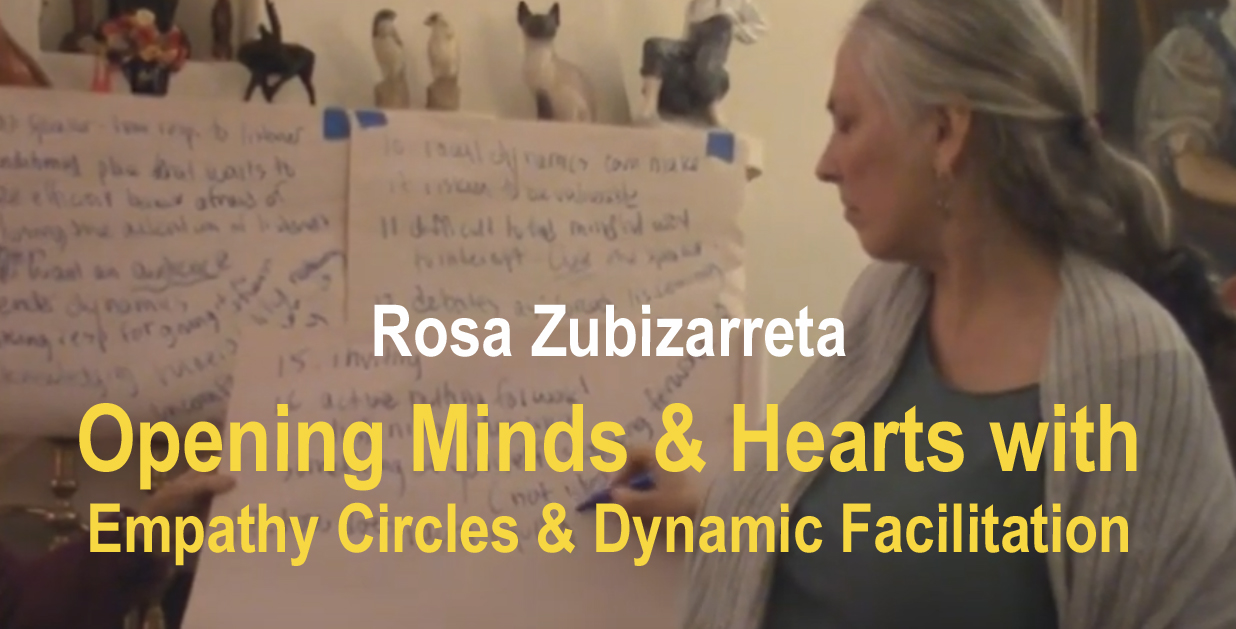
Rosa Zubizarreta works with leaders and groups to catalyze creativity and
collaboration. She specializes in developing organizational capacity for
strategic conversations to facilitate group learning, shared systemic
perspectives, and effective action.
Rosa brings deep content expertise in working with engaged empathy to
evoke collaborative sense-making, group flow, and energetic alignment
within highly diverse groups. Author of
"From Conflict to Creative Collaboration: A User's Guide to Dynamic
Facilitation," she teaches this work internationally.
In the last few years, she has
been exploring
the use of Empathy Circles with
some of her organizational clients, with facilitator learning groups, and
in communication workshops.
'
Rosa says, "I'm totally excited to see that
Edwin Rutsch, the creator of
Empathy
Circles, has been bringing his work into the arena of
healing political divides. My
experience is that this simple-yet-powerful form is actually quite
revolutionary, in the
best sense of the word..."
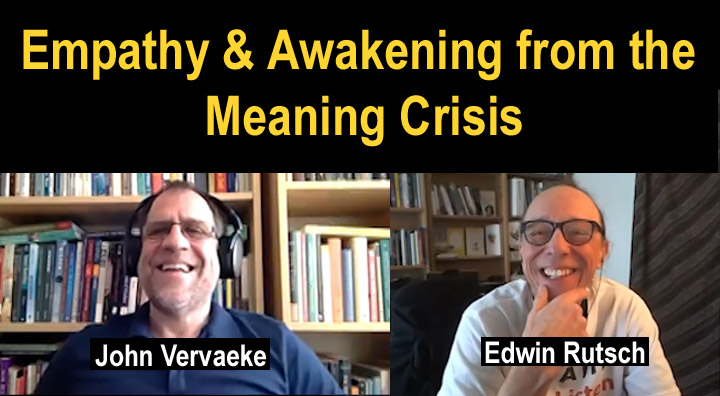
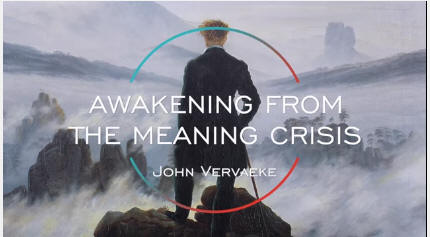
John Vervaeke, is an award-winning lecturer at the
University of Toronto in the departments of psychology, cognitive
science and Buddhist psychology. His work is in integrating science
and spirituality to solve the meaning crisis. He hosts
an extensive Youtube video lecture series entitled,
Awakening from the
Meaning Crisis and
has taken part in numerous public dialogues to explore the
topic.
John writes, "The Meaning Crisis is at the root of modern crises of mental
health, the response to environmental collapse, and the political system.
We are drowning in bullshit--literally "meaninglessness". We feel
disconnected from ourselves, each other, the world, and a viable future."
In this dialogue, Edwin Rutsch and John discuss how
empathy relates to John's work to solve the meaning crisis. We begin by
trying to get a clear mutual understanding on what we mean by empathy.
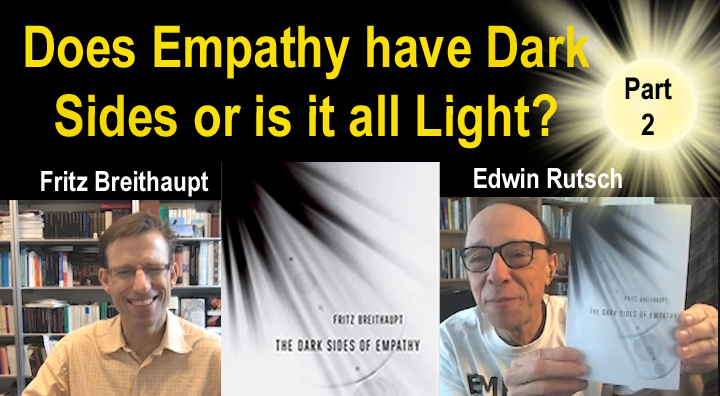
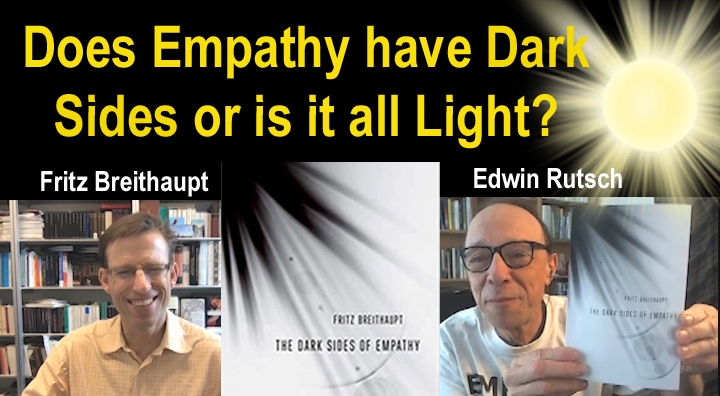
Fritz Breithaupt is Provost
Professor at Indiana University Bloomington. He founded and directs the
Experimental Humanities Laboratory at IU. He is author of the book,
The Dark Sides of Empathy.
Fritz argues that some of the dark sides of empathy include; self-loss,
side taking, identifying with the helper, sadistic empathy and vampiristic
empathy. Edwin argues that empathy is light and the so-called dark sides
are not empathy, but blocks to empathy.
Fritz says (and Edwin agrees)
that a benefit of empathy is;
"Empathy
intensifies our experiences and widens the scope of our perceptions. We
feel more than we could with-out it, and it enables us to participate more
fully in the lives of others, even fictional characters."
and
"Empathy
is, of course, a critical factor in healthy long-term relationships, too,
making it easier for us to understand our family members or romantic
partners and anticipate their emotional needs and reactions. Love without
empathy would be a sad thing for most people."
The good news is that empathy serves as an antidote
to burnout or "compassion fatigue." Note the language here.
Unregulated empathy results in "compassion fatigue." However, empathy
lessons repeatedly distinguish empathy from compassion.
Most providers of empathy find that with a modest amount of training,
they can adjust their empathic receptivity up or down to maintain
their own emotional equilibrium. In the face of a series of sequential
samples of suffering, the empathic person is able to maintain his
emotional equilibrium thanks to a properly adjusted empathic
receptivity. No one is saying that the other's suffering or pain
should be minimized in any way or invalidated. One is saying that,
with practice, regulating empathy becomes a best practice.
Peter Limberg
- Empathy Circles 'a good conversational modality for memetic mediators to have
in their toolkit.'
John Vervaeke
- Psychology and Cognitive Science Professor | Integrating
science and spirituality to solve the meaning crisis
Jason Snyder
- I found the Empathy Circle format to be a very useful 'enabling
constraint' encouraging a dynamic interplay between co-presence, theory,
and embodied/intuitive processing. Thanks guys!
Edwin Rutsch
- Director Center for Building a Culture of Empathy
EMPATHY CIRCLE
What is an Empathy Circle? An Empathy Circle is a structured dialogue
process that effectively supports meaningful and constructive dialogue.
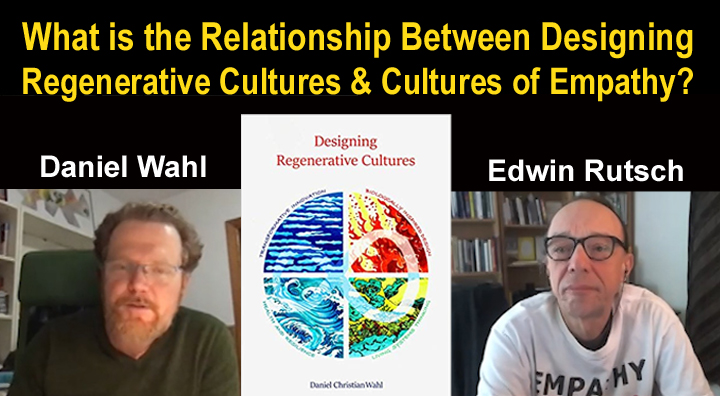
Daniel Christian Wahl
is author of
Designing Regenerative Cultures. In his book,
Daniel explores ways of relating to the many converging crises and
opportunities faced by humanity at a local, regional and global
scale. He invites us to step back from our tendency to want
quick-fix solutions.
In this dialogue, we talk about the relationship between
designing Regenerative Cultures and Cultures of Empathy. We see how
they are closely interrelated. Instead of othering and
separating from each other, we need to come together with mutual
empathy, presence, connection and care to heal the planet and
co-design
Regenerative and
Empathic Cultures.
Daniel writes, "Spreading the story of why we care about life and the health
of the whole and sharing the narrative of interbeing is culturally
creative meta-design. By sharing the new and ancient story of interbeing
we facilitate the emergence of diverse regenerative cultures
scale-linked by empathy and cooperation."
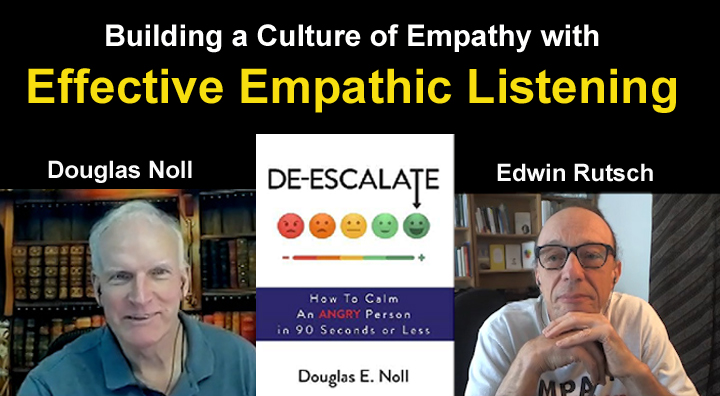
Doug Noll has been in professional practice for over 40 years. For the
past 20 years, he has dedicated himself to understanding the emotional and
biological origins of human conflict. With this knowledge, he has
developed a set of empathic listening skills that "work the first
time, every time". He is author of,
De-Escalate: How to Calm an Angry Person in 90 Seconds or Less Paperback.
Doug says: "Empathic leadership development is
essential for teachers, educators, administrators, and school board
members. Without the ability to connect with students and parents
quickly and effectively, conflict escalates.Empathic leadership is a skill comprised of three
elements:
The ability to ignore the words, focus on
emotions, and reflect those emotions back
The ability to problem-solve specific issues
once calm is restored
The ability to create a learning environment
that is emotionally safe
This skills must be learned, practiced and honed
to be mastered. Research shows that learning empathic leadership
skills will not come from a one-off workshop."
God and Satan
take part in this Restorative Empathy Circle Mediation to work out their
differences. For millennium God and Satan have been in conflict with each
other. Edwin Rutsch invites them to take part in a Restorative Empathy Circle
to use mutual empathic listening to talk out their differences. The opening
issue they talk about is that Satan left heaven.
An Empathy Circle is a structured dialogue process based on mutual active
listening. The process increases constructive dialogue and mutual
understanding by ensuring that each person feels fully heard to their
satisfaction. It can be used for conflict mediation.
Fritz Breithaupt is
Provost Professor at Indiana University Bloomington. He founded and
directs the Experimental Humanities Laboratory at IU. He is
author of the book,
The Dark Sides of Empathy.
Fritz
argues that some of the dark sides of empathy include; self-loss,
side taking, identifying with the helper, sadistic empathy and
vampiristic empathy. Edwin argues that empathy is light and the
so-called dark sides are not empathy, but blocks to empathy.
Fritz says (and Edwin agrees)
that a benefit of empathy is;
"Empathy
intensifies our experiences and widens the scope of our perceptions. We
feel more than we could with-out it, and it enables us to participate more
fully in the lives of others, even fictional characters."
and
"Empathy
is, of course, a critical factor in healthy long-term relationships, too,
making it easier for us to understand our family members or romantic
partners and anticipate their emotional needs and reactions. Love without
empathy would be a sad thing for most people."






 (View Video